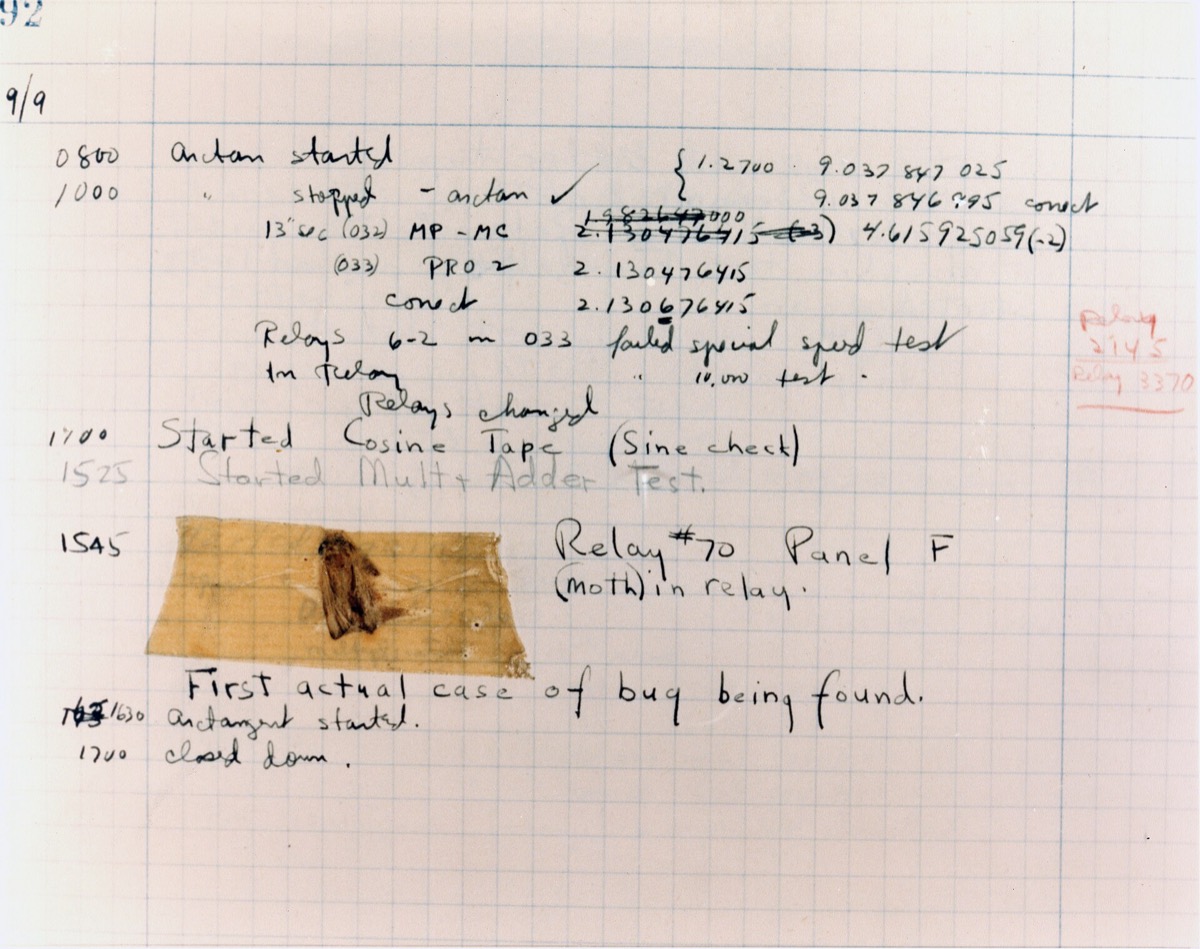
The word bug for a technical fault originates with Thomas Edison in the 1800s, long before computers existed. On 9 September 1947 a team working on the in Cambridge, Massachusetts reported one of a different kind, and the entry survives.
A moth, caught between the . They taped the dead insect into the computer’s logbook, and one of the team wrote beside it: first actual case of bug being found. The programmer was present, and made the incident famous later in her many public lectures.
In September 1947, a team of computer scientists and engineers reported a moth caught between the relay contacts of the Harvard Mark II computer in Cambridge, Massachusetts. The machine computed by moving metal, so an insect in the wrong place was a real fault.
They taped the dead moth into the logbook. One of the team members wrote beside it: first actual case of bug being found, which is a line that only makes sense as a joke about an existing word.
That is the part the popular version loses. The term bug for a mistake or failure in a technical system originates with Thomas Edison in the 1800s, so this was not the birth of the word but a pun on it.
Grace Hopper, a Computer History Museum Fellow in 1987, was present and made the incident famous later on in her many public lectures. The word is still used widely, and the moth is still in the logbook.
wat. The bug was a moth, the word was already old, and the log entry says first actual case.
wat wat
The phrase was already in use, which makes this a joke written into a logbook rather than the origin everybody repeats.
How do we know?
The Computer History Museum records the date, the machine, the moth taped into the logbook, the wording of the entry, and Hopper’s role in making the story known.
What is still unknown
This is a museum note on a single logbook entry, and it corrects the origin story rather than telling the whole history of the word.
Learn something?
Where to next
 What did the first computer virus actually do?computing history