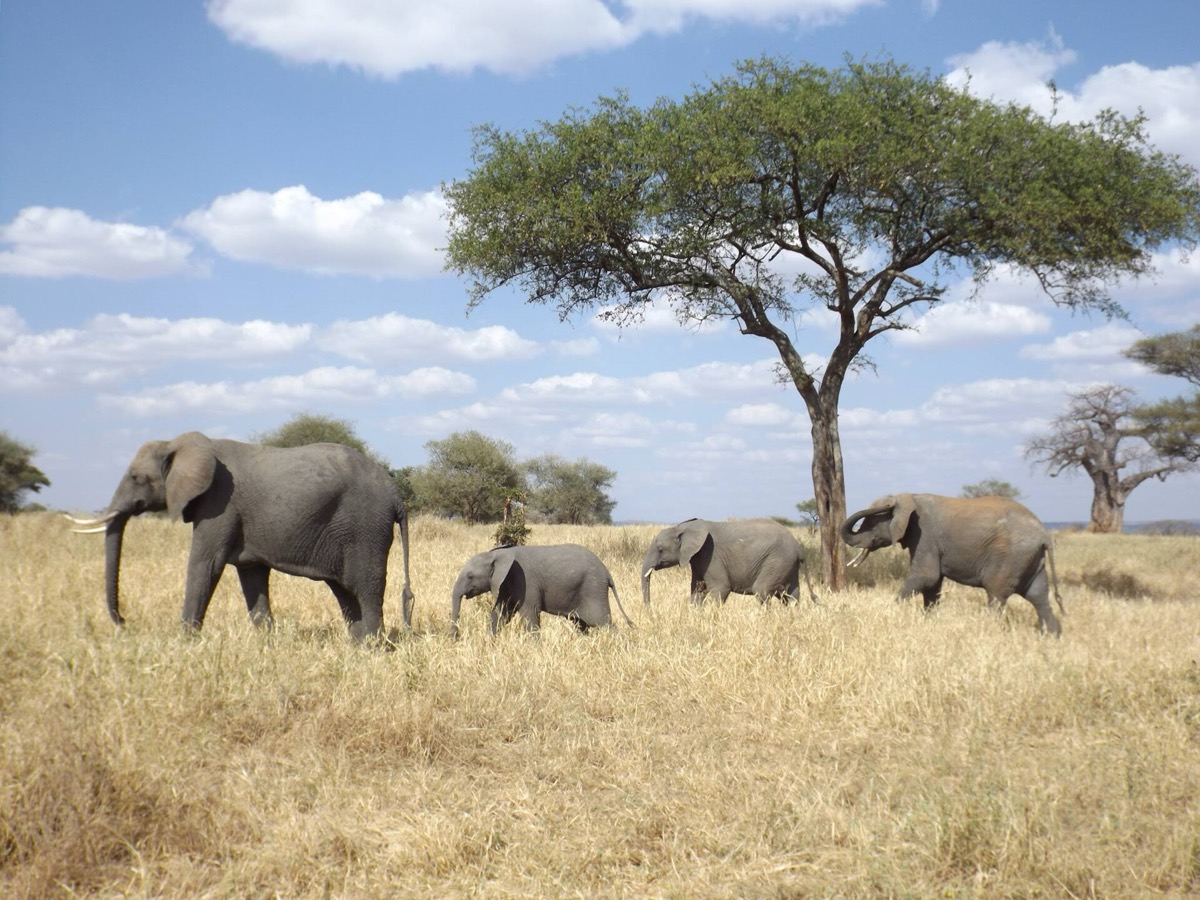
Humans are an odd sort of predator, because the danger depends entirely on which humans. Prey species were already known to sort people by sight and by smell, and a voice carries far more than either. So researchers played recordings to elephant family groups in Amboseli and watched what the herds did. The recordings varied the speaker’s ethnic group, sex and age. How fine is the distinction?
Fine enough to separate men from women and boys. Playbacks of Maasai voices significantly raised and , which is the response to a real threat. But the voices of Maasai women and boys, subcategories that generally pose little danger, were significantly less likely to produce it. The elephants were not reacting to a language. They were grading a risk.
Classifying a predator accurately pays off directly, and humans present an unusually hard case. Different human subgroups living around the same animals can pose radically different levels of danger, so a blanket fear of people would be both exhausting and wasteful.
Several prey species were already known to tell human categories apart by sight or smell. A voice, though, carries far more: the speaker’s sex, rough age and the accent and language of their group, all in a few syllables. Controlled on free-ranging African elephant family groups in Amboseli National Park put that to the test.
Maasai voices significantly increased the probability of defensive bunching and investigative smelling, compared with voices from an ethnic group that does not represent the same threat. So the herds were sorting people by the level of danger they carry, from sound alone.
The finer result is what makes it a judgment rather than a reflex. The responses were specific to the sex and age of the Maasai speaker, with women and boys, who would generally pose little threat, significantly less likely to trigger bunching or smelling. Given how long and how widely humans have hunted animals, the authors suggest the same ability may have been selected for in other cognitively advanced species. Note the scope, though: this is one population, one park, and a brief behavioral reaction.
wat. Maasai men on a loudspeaker sent the herd into a defensive huddle, and Maasai women and boys mostly did not.
wat wat
Sorting humans by sight or smell was already documented in prey species. A voice carries much richer information, and this shows an animal pulling out exactly the part of it that bears on survival.
How do we know?
McComb and colleagues ran controlled playback experiments on free-ranging African elephant family groups in Amboseli National Park, Kenya, varying the ethnicity, the sex and the age of the recorded speaker.
What is still unknown
A playback study measures a short behavioral reaction in one population with a specific local history involving specific people. What an Amboseli elephant learned says nothing about elephants elsewhere.
Learn something?
Where to next
 You were told you are a visual learner. Should you be taught only in pictures?learning
 Does living abroad really make a person more creative?learning
 Does computer read-aloud help you understand a text, or only read it out?learning