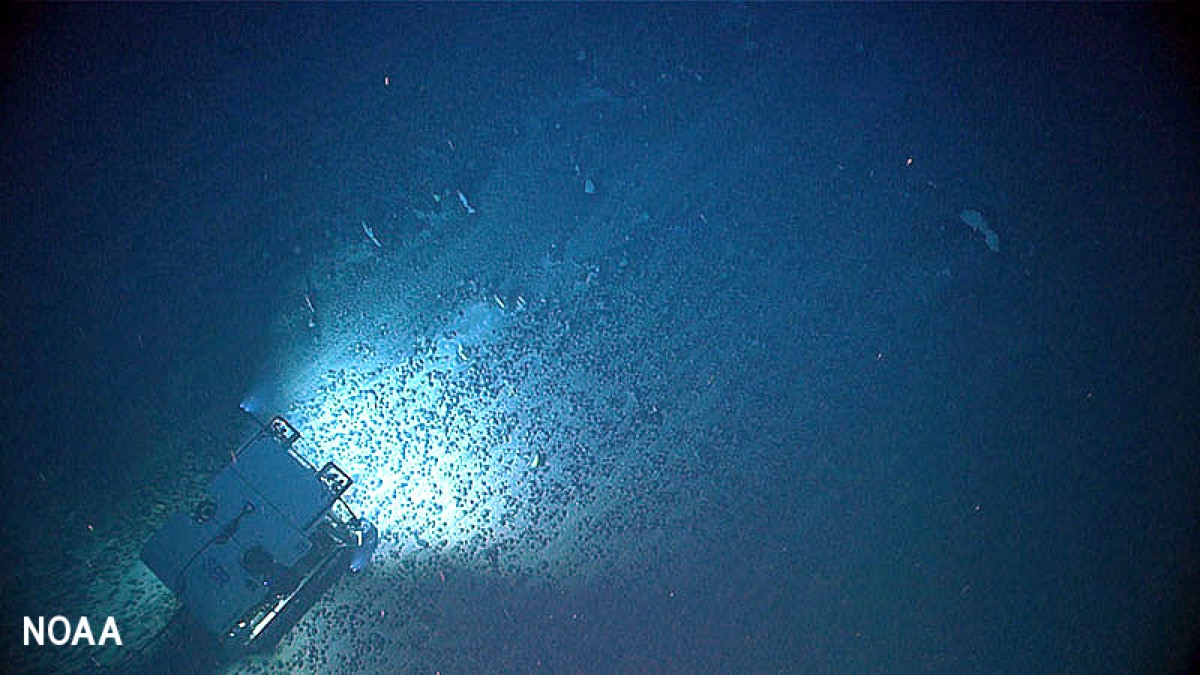
provide hard substrate for on the abyssal seafloor, kilometers below the surface, and deep-seabed mining targets exactly those mineral-rich lumps. The debate has focused on the animals a mining machine would crush. What the nodules themselves support had stayed unclear.
A food web that partly collapses without them. Modeling two Pacific regions, the authors found that knock-down effects of nodule removal cost 17.9 percent to 20.8 percent of all taxa and 22.8 percent to 30.6 percent of network links. attached to the nodules came out as key structural species.
Polymetallic nodule fields provide hard substrate for sessile organisms on the abyssal seafloor, between 3,000 and 6,000 meters of water depth. Deep-seabed mining targets these mineral-rich nodules, and will likely modify both the consumer-resource interactions and the substrate-providing interactions within the abyssal food web.
The importance of the nodules themselves, and of the fauna attached to them, had remained unclear. The authors used seafloor imagery and published literature to develop highly resolved trophic and interaction webs for two regions of the Pacific.
The networks are large. The Clarion-Clipperton Fracture Zone web included 1,028 compartments connected by 59,793 links, far more than the 342 compartments and 8,044 links of the Peru Basin web. Each link is an interaction that nodule removal might break.
Removing the nodules propagates. Knock-down effects cost between a sixth and a fifth of all taxa, and up to a third of network links. Stalked glass sponges were identified as key structural species, which leads the authors to conclude that the nodules are critical for food-web integrity.
wat. Take away the rocks and a fifth of the species go with them.
wat wat
It moves the question from how many animals a machine kills to what disappears once the hard surface is gone.
How do we know?
Stratmann and colleagues built highly resolved trophic and non-trophic interaction webs for the Clarion-Clipperton Fracture Zone and the Peru Basin from seafloor imagery and published literature, then removed the nodules from the model.
What is still unknown
The losses are computed from interaction networks rather than observed after real mining.
Learn something?
Where to next
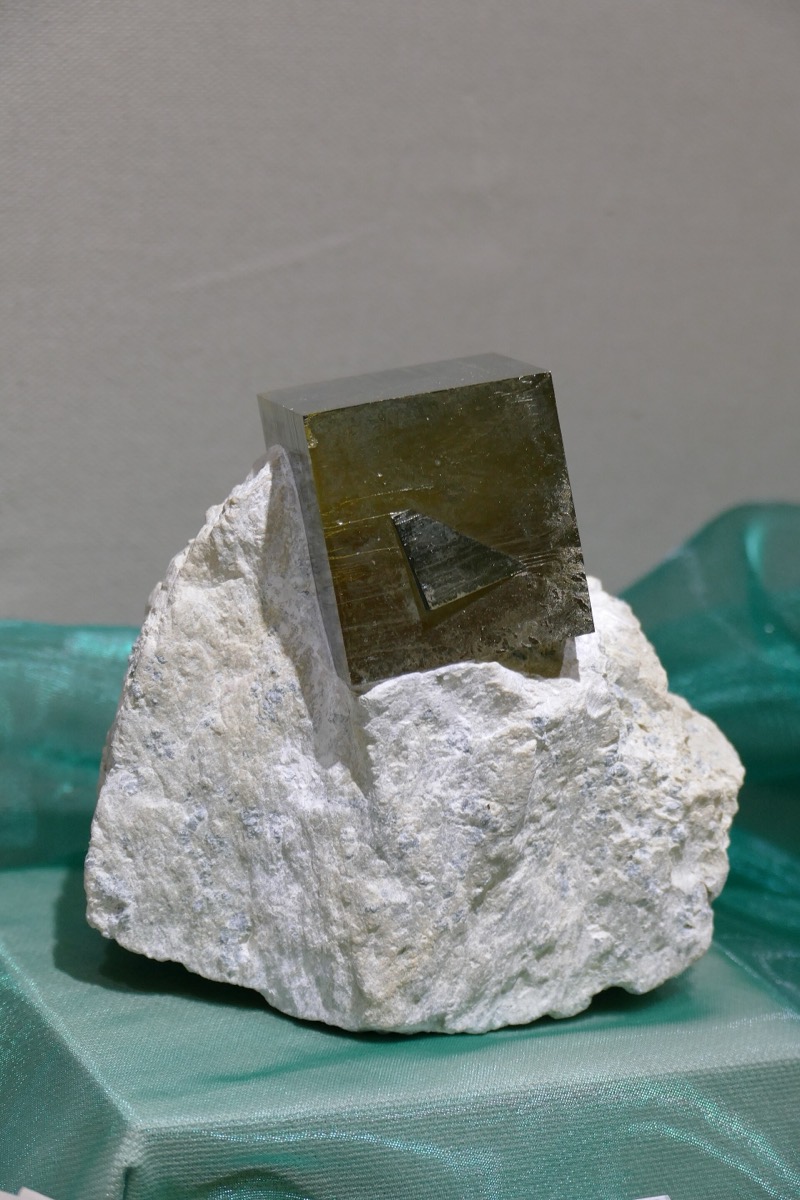 How does a rock come out of the ground as an almost perfect cube?minerals