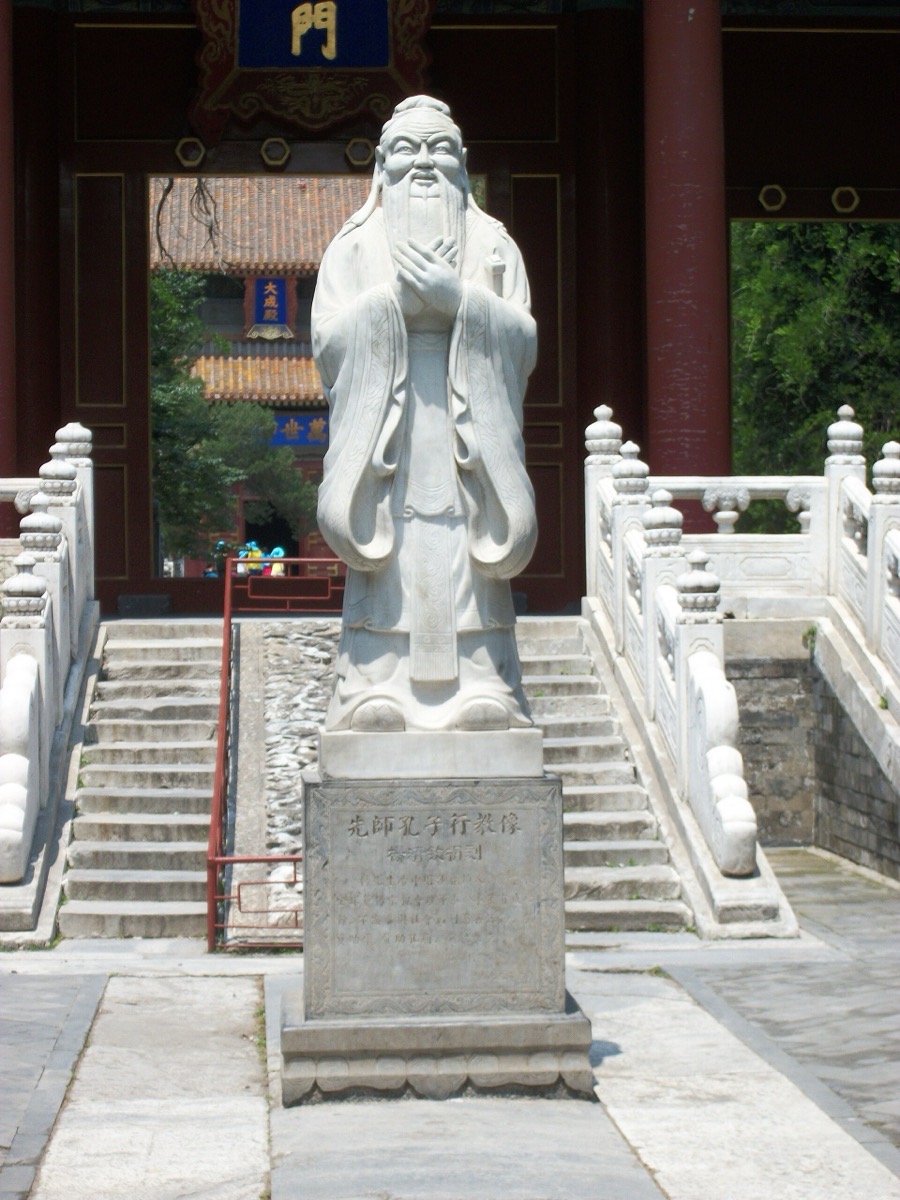
Confucius is probably the most significant thinker in East Asian history, and the is where people go to hear him. The text preserves dialogues and stories, and it also preserves a diversity of representations and concerns that later interpreters picked through. So whose words came out the other side?
More hands than one. The entry calls the philosophy of Confucius . What survives is the work of his hand, of his school, and sometimes even of his opponents, from centuries in which the philosophy drifted and grew before early Imperial sources fixed it in place.
Confucius is tied to many of the foundational concepts and cultural practices of East Asia, and he was cast in Early Modern Europe as a progenitor of Eastern thought. The early sources do preserve biographical details about Master Kong, and they preserve more than that.
The dialogues and stories about him reflect a diversity of representations and concerns. Strands of that were later selected and woven together by interpreters intent on appropriating or condemning particular views and traditions linked to his name.
Hence the entry’s conclusion that his philosophy is historically underdetermined. Multiple sets of coherent doctrines can be traced back to the early period, each grounded in different classical sources and different schools of interpretation.
What remains, in the entry’s words, is the work of the hand of Confucius, but also of his school, and sometimes of his opponents. Those centuries of elaboration and drift ended with the text fixed in sources like the Analects and Records of the Historian. That is ordinary for pre-modern writing, and the breadth it produced is part of why the voice kept its primacy.
wat. The Analects carries the voice of Confucius, of his school, and sometimes of the people arguing with him.
wat wat
A tradition built on quotation stands differently once you see that the quotations were selected by people with arguments of their own.
How do we know?
Csikszentmihalyi works from the early texts and the biographical tradition, starting with Sima Qian’s Records of the Grand Historian, and traces which doctrines each later school of interpretation grounded in which classical sources.
What is still unknown
This describes how the sources came to be rather than settling what Confucius taught, and reconstructions still differ.
Learn something?